


Transnational organized crime syndicates from Latin America are rapidly expanding their operational footprint in Africa, pivoting from traditional transit logistics to direct, domestic synthetic drug manufacturing. Highlighting this shifting security threat, law enforcement operations in West and Southern Africa have recently dismantled multi-million dollar industrial-scale methamphetamine laboratories managed with the direct assistance of foreign cartel specialists. This expansion relies on forming strategic financial linkages with local armed groups, exploiting maritime vulnerabilities, and capitalizing on growing regional consumer markets.
Industrial Production Hubs Uncovered in Forested Zones
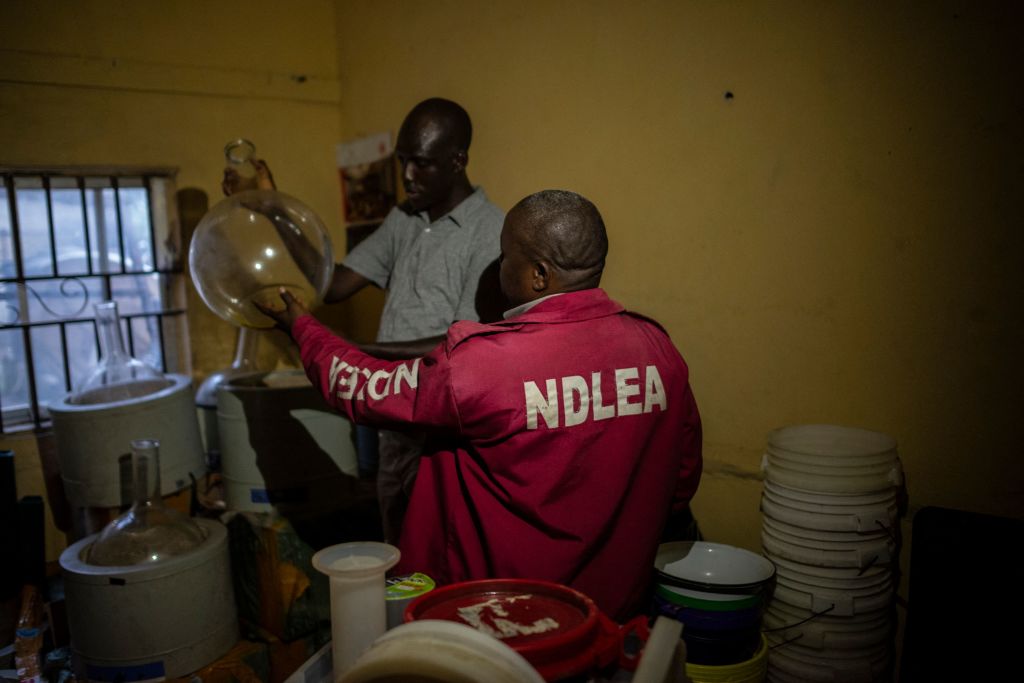
The expanding reach of Mexican drug networks was brought into sharp focus following an intensive anti-narcotics intervention by Nigerian authorities in Ogun State’s Abidagba forest. Security forces successfully raided a hidden clandestine laboratory, arresting three Mexican nationals alongside six local collaborators, and seizing chemical precursors and finished product valued at an estimated $363 million. To avoid aerial detection from unmanned systems and to insulate nearby urban centers from the highly distinct chemical odors associated with synthesis, syndicates are deliberately shifting manufacturing infrastructure into remote, heavily forested environments.
Organized crime experts with the Institute for Security Studies (ISS) observe that these operations utilize a trans-Atlantic supply line originating in Latin America that targets vital port cities near major economic zones. By inserting specialized chemical synthesis experts directly into regional manufacturing sites, dominant syndicates like the Sinaloa Cartel and the Jalisco New Generation Cartel (CJNG) are effectively franchising their illicit networks to eliminate cross-oceanic distribution costs and circumvent international maritime interdiction efforts.
Strategic Alliances and Paramilitary Taxes
The establishment of independent refining facilities is heavily enabled by financial arrangements with continental criminal elements, armed factions, and terrorist organizations. Cartels routinely route tax payments to local networks to guarantee unhindered transit through the Gulf of Guinea up to Northern Africa, securing a clear vector toward primary destination markets in Europe and the Middle East.
Concurrently, there is an increase in regional consumption patterns. Porous boundary controls, limited maritime security enforcement, and high regional youth unemployment rates combine to create a vulnerable environment. Beyond distribution, local insurgent forces and urban gang networks increasingly utilize these potent materials internally to execute high-intensity criminal operations, driving localized synthetic drug demands.
Advanced Manufacturing Refined in Southern Africa
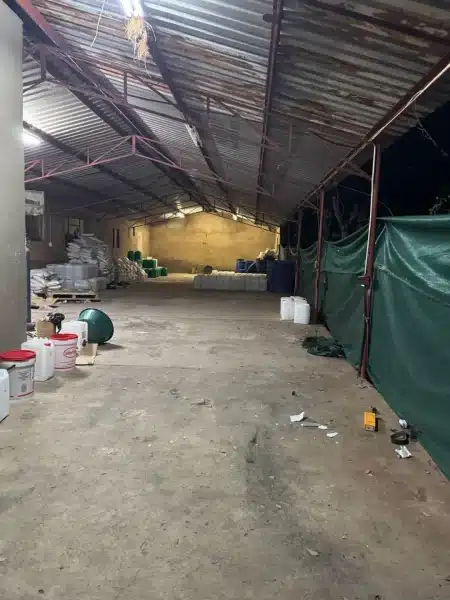
While West African nodes function as critical production and transit hubs, South African authorities have intercepted parallel operations designed to traffic raw materials across the continent for refinement in Southern Africa. Law enforcement recently uncovered a sophisticated industrial crystal methamphetamine facility in a rural farming municipality within the North West province, arresting four Mexican nationals and seven local suspects. The operation resulted in the seizure of firearms, massive chemical containers, and 481 kilograms of synthesized methamphetamine.
This raid marks the fourth elaborate laboratory linked directly to foreign cartels dismantled in South Africa over recent operational cycles. Previous interventions include a major $110 million facility on a commercial property in Limpopo, a $6 million industrial site near Tshwane, and a $20 million operational refinery in Volksrust where five foreign specialists were detained.
The sharp proliferation of local manufacturing directly correlates with severe increases in consumption indices across the continent. Recent findings by the Eastern and Southern Africa Commission on Drugs indicate that South Africa has evolved into one of the world’s most expansive consumer hubs for crystal methamphetamine, with usage metrics in East Africa scaling upwards consistently. Civil leaders and regional security experts warn that the socioeconomic blowback is severely destabilizing small rural communities, where the proximity to manufacturing centers catalyzes escalating homicide rates, violent crime, and a broader erosion of traditional family structures and localized commercial economies.