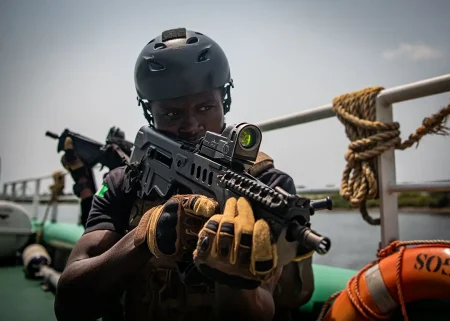
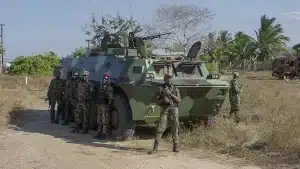


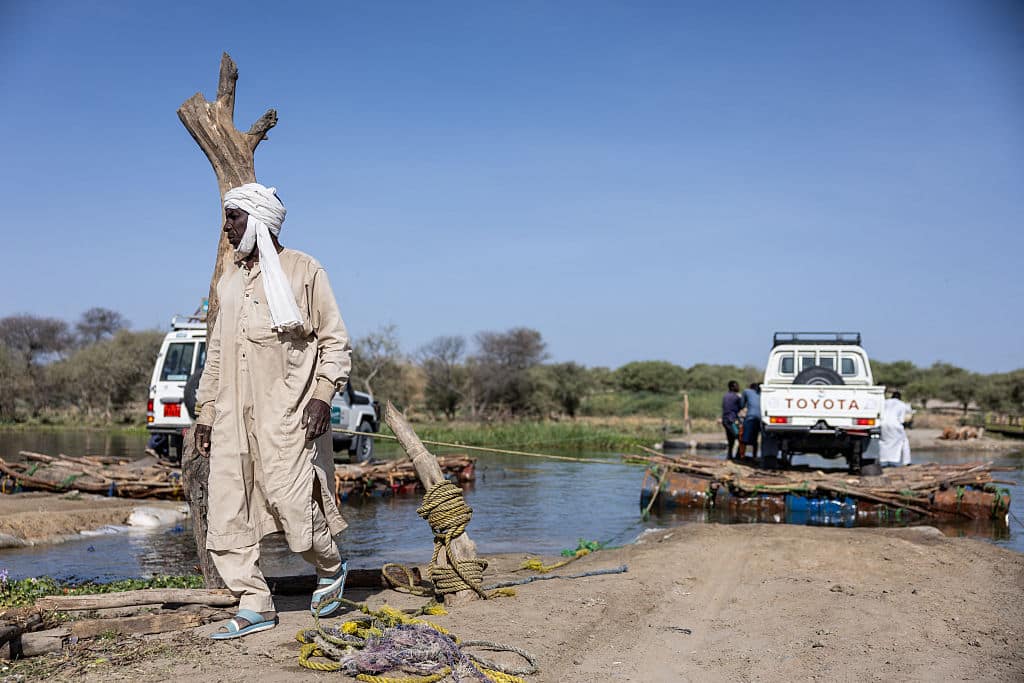
A violent conflict for absolute control over the highly lucrative trade corridors and island bases of the Lake Chad basin has escalated between Boko Haram and the Islamic State West Africa Province (ISWAP). This intense rivalry extends across the poorly monitored and porous borders of Cameroon, Chad, Niger, and Nigeria, trapping millions of local citizens in a dangerous cycle of systemic extortion, mass abductions, and high-intensity insurgent raids. The escalating friction highlights a critical shift from localized insurgencies to a coordinated, transnational conflict for regional economic dominance.
Technical Innovation and Financing Mechanisms
While both militant factions aim for regional hegemony, their financial strategies and operational methods differ significantly. ISWAP has established a highly structured shadow governance network over fishing and commercial communities throughout the basin, extracting an estimated $41.5 million annually via illegal taxation frameworks. Additionally, the group has modernized its operations by deploying tactical surveillance drones to direct complex ambushes, alongside integrating artificial intelligence into its encrypted communications and propaganda distribution.
In contrast, Boko Haram relies on less sophisticated tactics, frequently using indiscriminate violence and civilian massacres to secure resources. However, economic pressure from ISWAP’s territorial blockades has forced Boko Haram to increase its dependence on mass kidnappings-for-ransom to sustain its frontline operational budget. This desperate shift in tactics has drastically intensified the security risks faced by nearby frontier populations.
Decapitation Strikes and Violent Retaliation
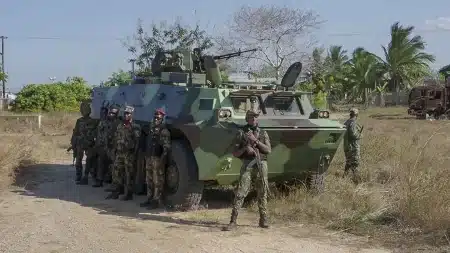
The growing strength of these armed groups has triggered major counter-terrorism responses from international security frameworks. Believing ISWAP posed the primary threat, a joint Nigerian and United States precision strike neutralized Abu Bilal al-Minuki, the Islamic State’s global director of operations, in northeastern Nigeria. This operation was quickly followed by a large-scale Nigerian military offensive across Borno State, which eliminated a prominent ISWAP sector commander and more than 50 frontline fighters.
                  LAKE CHAD REGIONAL SECURITY FLASHPOINTS

      NIGER
        |
        +---> [Diffa Region]: Systemic raids on transit routes
        |
  ======+============================== BORDER CONTROLS ==============================
        |
      CHAD
        |
        +---> [Barka Tolorom Base]: Boko Haram assault kills 24 soldiers
        |
        +---> [Lac Region]: 20-Day State of Emergency declared; 2 generals ambushed
        |
  ======+============================== BORDER CONTROLS ==============================
        |
     NIGERIA
        |
        +---> [Borno State]: Joint US-Nigeria strike eliminates Abu Bilal al-Minuki
        |
  ======+============================== BORDER CONTROLS ==============================
        |
    CAMEROON
        |
        +---> [Far North]: Extortion grids and agricultural blockades paralyze farming
Despite these high-profile losses, security experts note that targeted killings often trigger aggressive retaliatory campaigns rather than organizational collapse. Capitalizing on the shifting military focus, Boko Haram executed a high-casualty assault on the Barka Tolorom military base in Chad, killing 24 soldiers and wounding 46 others. Following a subsequent ambush that killed two Chadian generals, N’Djamena declared three days of national mourning and enforced a strict 20-day state of emergency across the Lac region.
Regional Instability and Humanitarian Breakdown
The prolonged warfare involving state militaries and rival jihadist factions has triggered a catastrophic humanitarian breakdown across Cameroon’s Far North, Chad’s Lac region, Niger’s Diffa province, and northeastern Nigeria. According to official data from the United Nations Office for the Coordination of Humanitarian Affairs (OCHA), more than 3.25 million displaced persons and refugees are scattered across the four border countries. Furthermore, roughly 8.2 million people require urgent emergency assistance, with an estimated 7.4 million individuals experiencing acute food insecurity.
In Cameroon’s Far North department of Logone-et-Chari, persistent border raids, livestock looting, and active kidnapping rings have paralyzed local economies. Fear of insurgent attacks has prevented communities from tending to their agricultural fields, cutting off critical food supplies and overwhelming overstretched field clinics managed by Doctors Without Borders (MSF). These medical teams face severe staff shortages and recurring disease outbreaks while treating thousands of malnourished children and vulnerable patients trapped in the conflict zone.