


The Al-Qaeda-affiliated insurgent coalition Jama’at Nusrat al-Islam wal-Muslimin (JNIM) has intensified its systemic economic blockade of Malian highways, intercepting cross-border fuel and supply convoys in a coordinated campaign to erode the central government’s authority. By severing vital transport networks connecting Bamako to neighboring trade partners like Côte d’Ivoire, Guinea, and Senegal, the group seeks to isolate major population centers and starve the ruling military junta of strategic resources. Security analysts warn this method deliberately replicates governance subversion models previously executed by transnational militant groups such as the Taliban in Afghanistan and al-Qaeda factions in Syria.
Governance Subversion and the Parallel Administration Strategy
JNIM’s operational calculus expands far beyond conventional hit-and-run guerilla maneuvers, shifting toward a deliberate strategy of alternative state administration. The insurgent alliance enforces a strict dual system across the rural interior, completely blockading communities deemed loyal to the state while rewarding villages that accept its administrative dominance. In these captured rural enclaves, JNIM steps directly into the security vacuum left by retreating state infrastructure, offering localized stability while subjecting residents to its highly rigid interpretation of Islamic law.
This sophisticated approach effectively exploits widespread civilian alienation driven by the Malian military’s heavy-handed counter-insurgency operations. The deployment of uncoordinated state sweeps alongside Russian auxiliary forces from the Africa Corps has frequently resulted in mass civilian casualties, exemplified historically by the devastating 2022 Moura Massacre targeting Fulani communities. By positioning itself as a predictable alternative to state-sponsored violence and aggressively recruiting impoverished rural youths lacking economic opportunities, JNIM actively seeks to portray itself as a legitimate government-in-waiting.
Comparative Dynamics and Tactical Friction
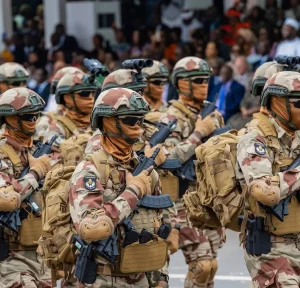
While independent defense researchers confirm that JNIM is utilizing an insurgency playbook highly reminiscent of the Taliban’s protracted takeover of Afghanistan, significant structural friction remains within the Malian theater. Unlike the Taliban’s historical context, JNIM’s primary goal of imposing sweeping Sharia law lacks broad popular support among the Malian citizenry. Despite these ideological limitations, the group’s economic leverage remains acute; even with the deployment of joint Malian-Russian armor escorts, JNIM fighters continuously intercept national supply lines, recently torching a critical resource convoy inbound from Guinea on May 19, 2026.
| Militant Organization | Geographic Theater | Core Strategy | Ultimate Strategic Objective |
| JNIM | Mali / Western Sahel | Cross-border highway blockades, economic isolation of cities, rural parallel governance | Total collapse of the military junta, implementation of strict Islamic law |
| The Taliban | Afghanistan | Rural encirclement, attrition warfare, targeting state logistics lines | Total territorial capture and state replication (Achieved) |
| Al-Qaeda / Al-Shabaab | Syria / Somalia | Fragmentation of state territory, localized siege tactics, exploitation of governance vacuums | Establishment of cross-border religious emirates/caliphates |
Transnational Expansion and Regional Security Implications
The ongoing fragmentation of the Malian state structure is severely exacerbated by the complete paralysis of multilateral defense frameworks across the Sahel region. Although the military regimes of Burkina Faso, Mali, and Niger formed the Alliance of Sahel States under the pretext of a unified counter-terrorism response, the alliance has failed to adequately fund or deploy a functional joint regional force. This operational inertia leaves each nation to combat fluid, highly mobile insurgent columns in complete isolation.
Consequently, JNIM has begun aggressively projecting its operational reach outside the immediate Sahelian basin, establishing active combat cells within northern Benin and infiltrating deep into northwestern Nigeria. Security analysts emphasize that a structural collapse of the Malian junta or an official concession to the insurgents’ territorial demands would trigger a catastrophic cascade effect across the Economic Community of West African States (ECOWAS) region. If left unchecked, the current economic encirclement of Bamako could rapidly evolve from a localized civil war into a generalized, subcontinent-wide security crisis.