


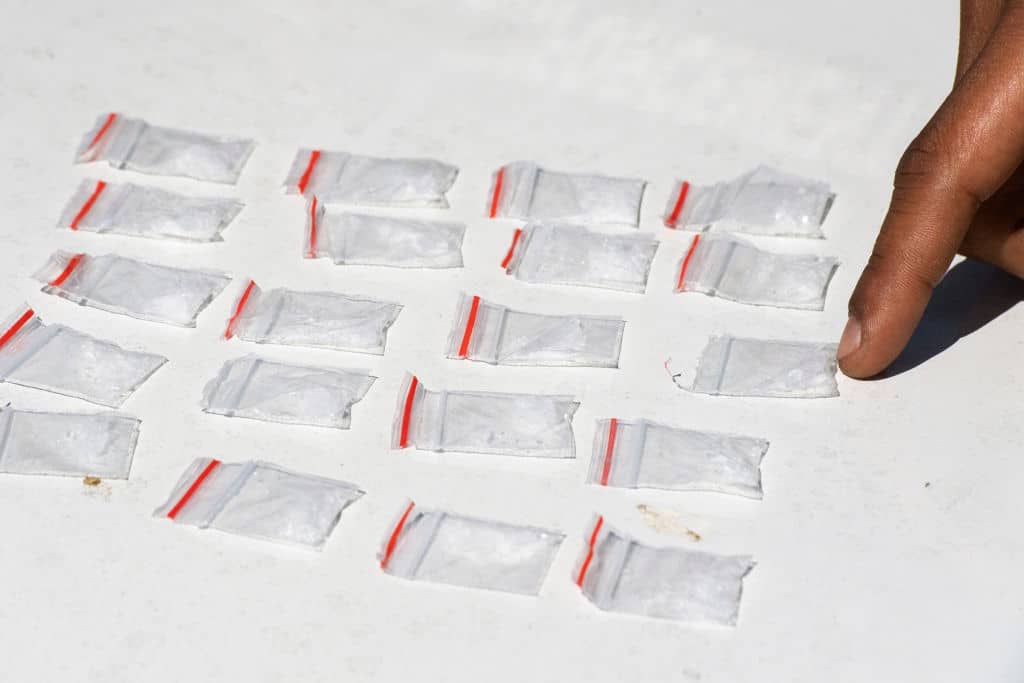
The interception of an advanced crystal methamphetamine manufacturing facility in mid-May 2026 has confirmed the expanding footprints of Mexican transnational drug syndicates within South Africa. Armed specialized units raided a remote farm in the North West Province, arresting 11 individuals—including four Mexican nationals—and confiscating 481 kilograms of synthesized methamphetamine. Valued at over 1 billion rand ($61 million), the highly organized industrial operation represents the fourth industrial-scale narcotics laboratory with distinct Mexican cartel links discovered by state security agencies within a short operational timeframe.
Franchising Industrial Narcotics Across Rural Domains
Independent security analysts indicate that major Mexican syndicates, such as the Sinaloa Cartel and the Jalisco New Generation Cartel (CJNG), are actively franchising industrial-scale manufacturing hubs across the continent. Rather than relying solely on international maritime trafficking routes, these syndicates deploy highly specialized chemical engineers directly to remote, rural locations. Similar illicit production templates have already been documented by law enforcement units operating within Kenya and Nigeria, illustrating a deliberate strategy to embed structural manufacturing operations directly inside African markets.
The mid-May operational success follows a sequence of massive law enforcement interventions targeting this transnational network:
-
September 2025 (Volksrust): South African authorities apprehended five Mexican nationals during a rural raid in Mpumalanga, dismanting a hidden industrial compound containing over $20 million worth of high-purity methamphetamine.
-
July 2024 (Groblersdal): Special organized crime units breached an industrial drug outpost on a secluded farm in Limpopo Province. The operation netted two Mexican nationals and chemical stockpiles valued at 2 billion rand ($122 million), marking one of the largest single narcotics seizures in regional history.
Strategic Geopolitical Position and Border Vulnerabilities
Criminologists emphasize that these highly technical compounds do not operate in isolation but depend on porous border checkpoints and weak law enforcement oversight. The selection of rural borders—such as Limpopo Province, which shares direct boundaries with Botswana, Zimbabwe, and Mozambique—provides syndicates with optimal logistics to manage both domestic distribution and international transshipment. South Africa represents one of the largest global consumer markets for crystal methamphetamine, colloquially termed “tik,” making the territory an extremely lucrative destination for cartel expansion.
The state’s domestic vulnerabilities are further compounded by severe gaps in border monitoring, deficient forensic tracking networks, and systemic corruption. Law enforcement officials acknowledge it remains unclear whether the bulk of the refined chemical cargo is intended for the expanding domestic user base or packaged for rapid export to high-value markets across East Asia and Europe via South Africa’s expansive commercial transit hubs.
Market Diversification and Synthetic Opioid Proliferation
The operational reach of transnational syndicates inside South Africa extends far beyond methamphetamine production. In early May, maritime security units at Durban Harbour intercepted 32 bricks of high-grade cocaine valued at 13 million rand ($795,000) hidden inside a commercial bus shipped directly from South America and bound for Gauteng Province. This underscores the utilization of South African ports as fluid transit corridors for diverse international smuggling operations.
Of acute concern to regional public health and defense agencies is the recent emergence of highly lethal synthetic opioids within the local drug supply chain. Advanced toxicological screenings and wastewater analysis conducted in late 2024 definitively identified the presence of fentanyl across the Eastern Cape and KwaZulu-Natal provinces. With fentanyl being 30 times more potent than heroin, its introduction into local mixtures of cocaine and methamphetamine raises the threat level exponentially, forcing the South African Police Service (SAPS) and the Hawks to transition toward proactive, intelligence-driven border interdiction strategies.