
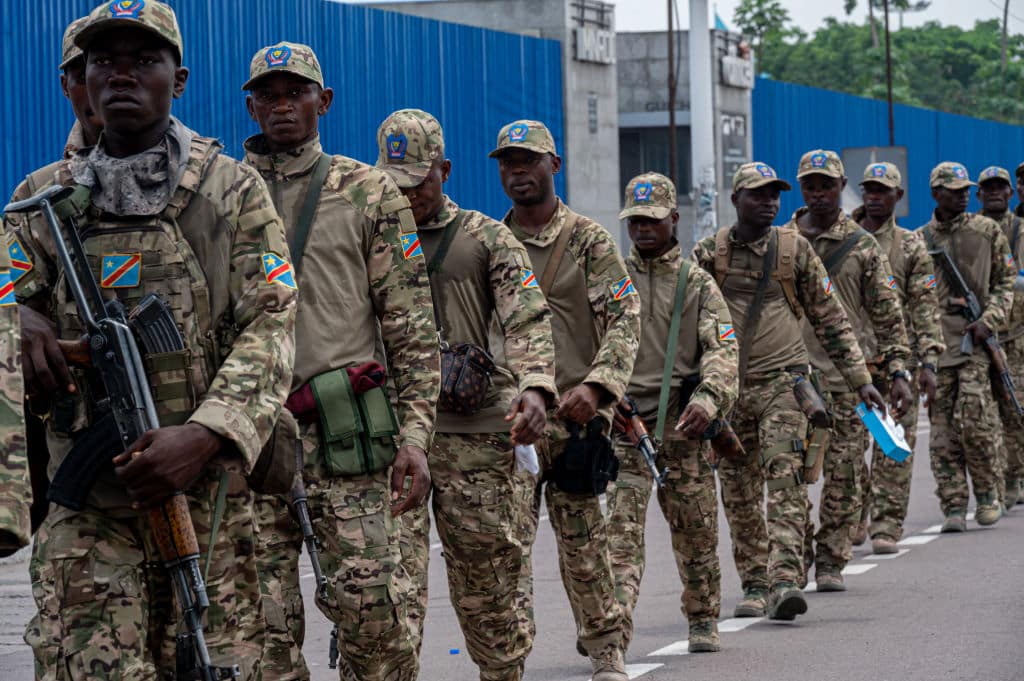
A scathing internal assessment by the National Assembly’s Defense and Security Committee has revealed severe institutional dysfunction within the Armed Forces of the Democratic Republic of the Congo (FARDC). The legislative inquiry followed a devastating wave of violence in early December 2025, during which bombardments and mass executions across eight towns in the South Kivu province left over 400 civilians dead and forced hundreds of thousands to flee into neighboring Burundi. The parliamentary report paints a grim picture of a military crippled by structural fragmentation, command failures, and strategic paralysis.
Structural Breakdown and Frontline Logistics Crisis
The legislative committee’s findings outline a profound breakdown in the FARDC’s operational capabilities, highlighting an absence of a coherent security presence in critical areas, weak organizational cohesion, and a fragile chain of command. Frontline units suffer from poor troop rotation schedules and an inability to adapt to modern combat technologies, which severely diminishes the effective use of field intelligence. Furthermore, the report warns of potential intelligence leaks and espionage infiltrating the upper echelons of the military apparatus.
Logistical and financial mismanagement has further degraded troop morale on the frontlines. The state has failed to disburse a monthly $320 special combat allowance to 18,000 deployed soldiers, accumulating a massive $150 million backlog that remained unpaid as of late April. Compounding these structural issues, Budget Ministry data revealed that only 74% of the allocated defense budget of 7.8 trillion Congolese francs was utilized during the previous fiscal year, leaving millions of dollars intended for the war effort completely unspent due to administrative bureaucratic bottlenecks.
The Wazalendo Militia and Regional Security Alliances
A central vulnerability identified in the assessment is the FARDC’s reliance on the “Wazalendo”—a loose coalition of local proxy militias partnering with the regular army to combat rebel factions like the M23 and the Allied Democratic Forces (ADF). Government officials characterized these irregular forces as disorganized, uncontrollable, and poorly managed. Operating with minimal oversight despite receiving state funds, members of the Wazalendo have faced serious accusations from international human rights organizations regarding widespread abuses, including sexual violence against civilians.
This lack of discipline has severely complicated the security landscape, with factions of the militia defecting to form independent criminal gangs that extort local populations, while other elements have cross-defecte to join the M23. Furthermore, the parliamentary report notes increasingly strained relations between the FARDC and the Ugandan Army, which is deployed in eastern DRC under joint operations. Security challenges are expanding geographically, stretching beyond the eastern frontier into North Ubangi and Tanganyika provinces, where auxiliary Zambian troops are currently supporting government operations.
Technological Disadvantage and the Need for Sector Reform
The DRC’s defense leadership conceded that the military’s conventional superiority is being systematically neutralized on the battlefield. While the FARDC recently acquired strategic long-range combat drones and advanced air assets, opposing rebel groups have successfully deployed sophisticated anti-aircraft and electronic jamming capabilities that nullify these technological investments. In response, defense officials are calling for an immediate overhaul of the state’s counter-terrorism doctrine, urging a comprehensive strategy that synthesizes military maneuvers with diplomatic initiatives, economic policies, and robust information warfare.
The internal crisis is exacerbated by a severe shortage of domestic policing infrastructure, leaving vast swaths of the country entirely ungoverned as approximately 12,000 police recruits remain backlogged awaiting formal training. The consequences of this security vacuum were starkly demonstrated during a lethal ADF raid on the western border town of Beni on May 31, which resulted in the deaths of 15 civilians and one soldier. The failure of local intelligence and delayed military intervention during the assault have triggered widespread public anger, fueling civilian demands for the immediate dismissal of regional operational commanders.